
The AI trends that matter for buyers are production patterns: agentic systems with HITL guardrails, RAG for grounded answers, and governance (approvals, audit, cost)—not model leaderboards or hype cycles.
Introduction
As AI becomes increasingly integrated into critical business systems—customer operations, engineering workflows, go-to-market automation—organizations must shift from demo thinking to production discipline. The trends that matter are not hype cycles or model leaderboards. They are patterns that help teams ship reliable, governed, and cost-effective AI systems.
This article highlights three production-minded trends: agentic AI with human-in-the-loop controls, retrieval-augmented generation (RAG) for grounded answers, and governance frameworks that balance autonomy with accountability.
Trend 1: Production-Ready Agentic AI
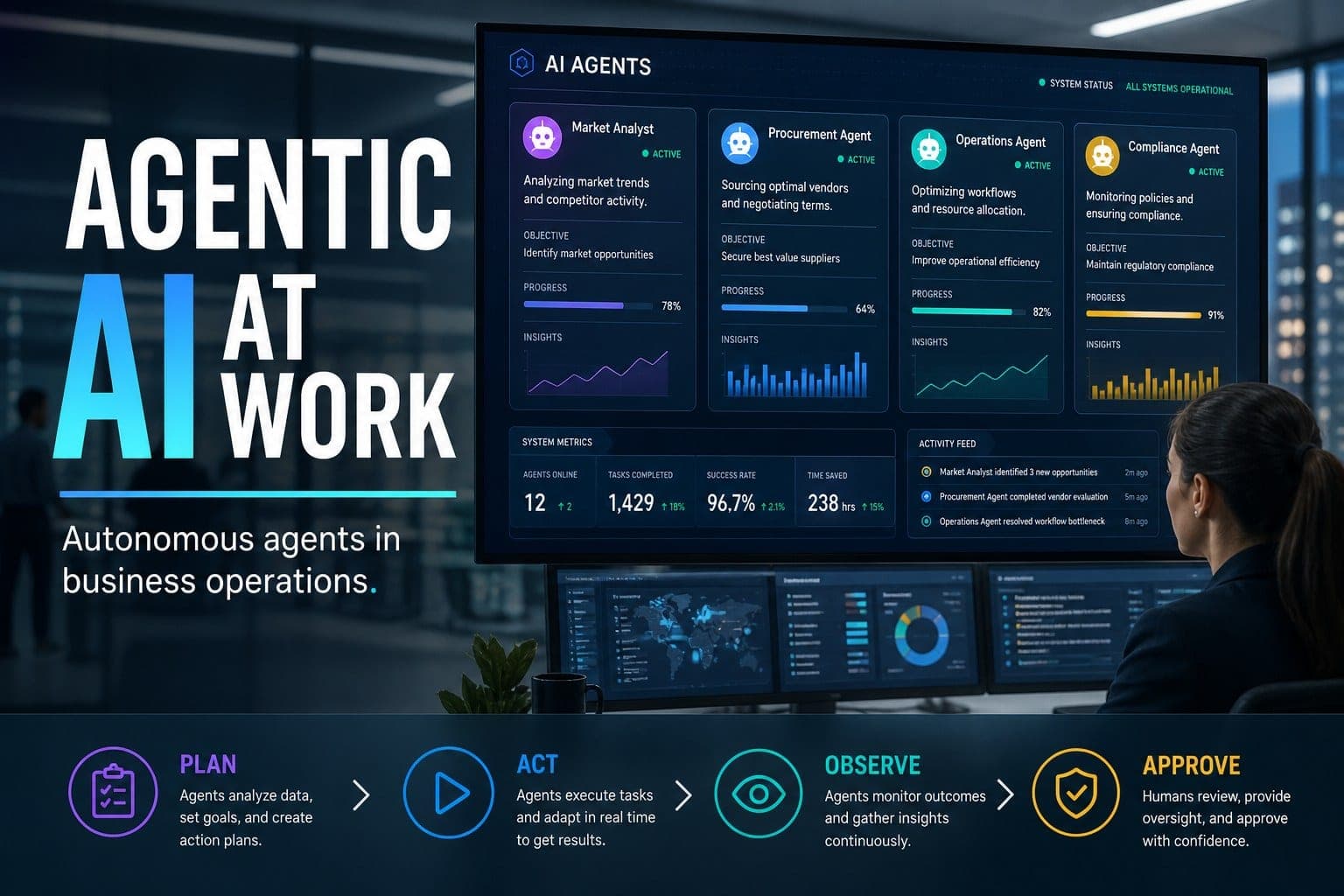
Agentic AI—autonomous agents that plan, call tools, and complete multi-step goals—has moved from research demos to production deployments. But not all agents are production-ready. The difference lies in guardrails:
What production agents require
- Explicit planning: DAGs or state machines that make agent plans inspectable and debuggable. Frameworks like LangGraph provide graph orchestration with branching, retries, and checkpoints.
- Tool boundaries: Each agent sees only the tools it needs, with permissions that prevent unattended high-risk actions (merge to main, deploy to prod, send email).
- Evaluation harnesses: Regression suites that catch when prompt changes or model upgrades break prior behaviors.
- Observability: Structured logs and traces that surface what the agent tried, what succeeded, and where it got stuck.
Where agents create value
Organizations deploy production agents for workflow bottlenecks where human capacity limits throughput but full automation feels too risky:
- Meeting automation: Agents join video calls, present slides, and answer questions grounded in deck content. See DeckVoice.
- GTM engines: Multi-channel outreach agents draft personalized messages across LinkedIn, email, and WhatsApp under operator dashboards. See Schmoozzer.
- Coding assistants: IDE agents propose multi-file refactors that developers approve before execution. See Nexora.
- Control planes: Orchestrators coordinate planning agents, coding agents, and tools (often via MCP) under one operator layer. See Conductor.
The trend is clear: agents are shipping to production, but only when teams invest in guardrails that prevent unattended autonomy.
Trend 2: RAG Systems for Grounded Answers
Large language models hallucinate. They generate plausible-sounding answers that are factually wrong. Retrieval-augmented generation (RAG) solves this by grounding answers in retrieved documents. Instead of relying on model training data, RAG systems search company documents, product catalogs, or knowledge bases—then cite sources.
Why RAG matters for production
- Accuracy: Answers stay tied to authoritative sources, not model hallucinations.
- Explainability: Users see which documents the agent retrieved and why.
- Updatability: Add new documents to the index without retraining models.
- Privacy: Private RAG indexes keep company data inside the client boundary, not shared public corpora.
Common RAG use cases
- Product recommendations: Semantic search over product catalogs with live behavior signals. See RAG product recommender.
- Customer support: Agents retrieve help docs, policies, and past ticket resolutions to draft answers.
- Legal and compliance: Contract review agents retrieve relevant clauses and flag non-compliant terms.
- Research and knowledge work: Agents summarize internal reports, cite sources, and answer domain-specific questions.
RAG is not a silver bullet—retrieval can still surface irrelevant documents, and models can still misinterpret context. But RAG significantly reduces hallucination risk compared to ungrounded generation.
Trend 3: Governance and Human-in-the-Loop (HITL) Controls
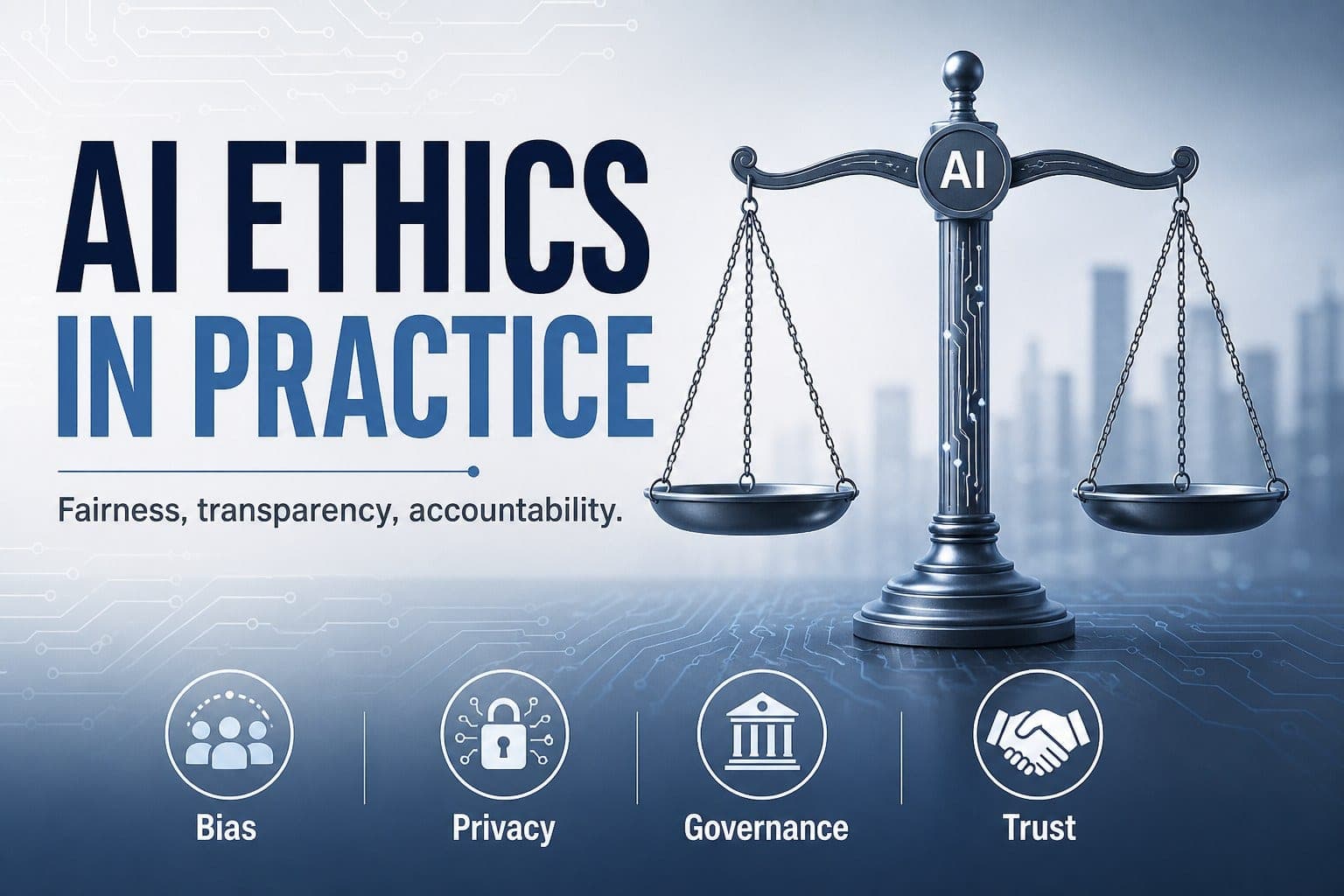
Autonomy without accountability creates production incidents and compliance violations. Governance frameworks define who owns AI systems, who approves high-risk actions, and how incidents are handled when systems fail.
Core governance components
- Roles and responsibilities: Who owns the model? Who approves deployments? Who monitors post-deployment performance?
- Approval gates (HITL): High-impact actions require human confirmation. Example: agents that merge to main, deploy to prod, or send customer email pause and wait for approval.
- Audit trails: Every agent action logs which agent, which human approved it, when, and why. Audit trails are compliance table stakes.
- Incident response plans: When the AI fails, who investigates? How do you roll back? How do you notify affected users?
- Cost controls: Dashboards that show model call volume and cost per task to prevent runaway spend.
Why HITL beats full autonomy
Unattended agents create trust crises. Example: a coding agent that auto-merges to main without review introduces breaking changes. A GTM agent that sends email without approval creates off-brand or inappropriate messages. HITL design solves this:
- Agents propose, humans decide: The agent drafts a plan or action; the human reviews and approves before execution.
- Approval UIs surface context: Diffs, cost estimates, and reasons so humans can make informed decisions.
- Rejection branches: If approval is rejected, the agent retries with adjusted inputs or escalates to a fallback.
VisionsCraft designs HITL workflows into every production agent: Nexora approves plans before execution, DeckVoice escalates unanswerable questions to humans, Conductor gates merges and deploys. This keeps teams in control while agents handle grunt work.
Conclusion: Production Discipline Over Hype
The AI trends that matter for buyers are not model leaderboards or research benchmarks. They are production patterns that help teams ship reliable systems under real-world constraints: latency, cost, compliance, and accountability.
Focus on these trends:
- Agentic AI with guardrails: DAG plans, tool boundaries, eval harnesses, and observability.
- RAG for grounded answers: Private retrieval over company documents with cited sources.
- Governance and HITL: Approval gates, audit trails, and incident response plans that balance autonomy with control.
Organizations that embed these patterns into their AI lifecycle build systems that earn trust, survive scrutiny, and generate measurable value. Those that chase demos without production rigor create incidents, erode trust, and stall adoption.
At VisionsCraft, we believe the most successful AI implementations balance technical innovation with production discipline. As AI evolves, maintaining commitment to guardrails, explainability, and governance ensures that AI development remains aligned with business value and human oversight.
Review our case studies for production examples, then book a consultation to discuss your AI roadmap.
FAQ
Which AI trends actually matter in production?
Three: agentic systems with HITL guardrails, RAG for grounded answers, and governance (approvals, audit, cost). Model leaderboards and hype cycles do not ship reliable operations.
What makes an agent production-ready?
Inspectable plans (DAGs or graphs), tool permissions that block unattended high-risk actions, regression evals, and traces that show what the agent tried when it fails.
Why is RAG a production trend?
LLMs hallucinate. Private RAG retrieves from the client's documents or catalog, cites sources, and can be updated without retraining—so answers stay tied to owned knowledge.
What is HITL in agentic AI?
Human-in-the-loop: the agent proposes a plan or action; a human approves before merge, deploy, or customer send. Rejection paths retry or escalate instead of acting unattended.
Explore agentic AI development or book a consultation with VisionsCraft.