ShowcaseMulti-Agent Systems
Conductor Multi-Agent Control Plane
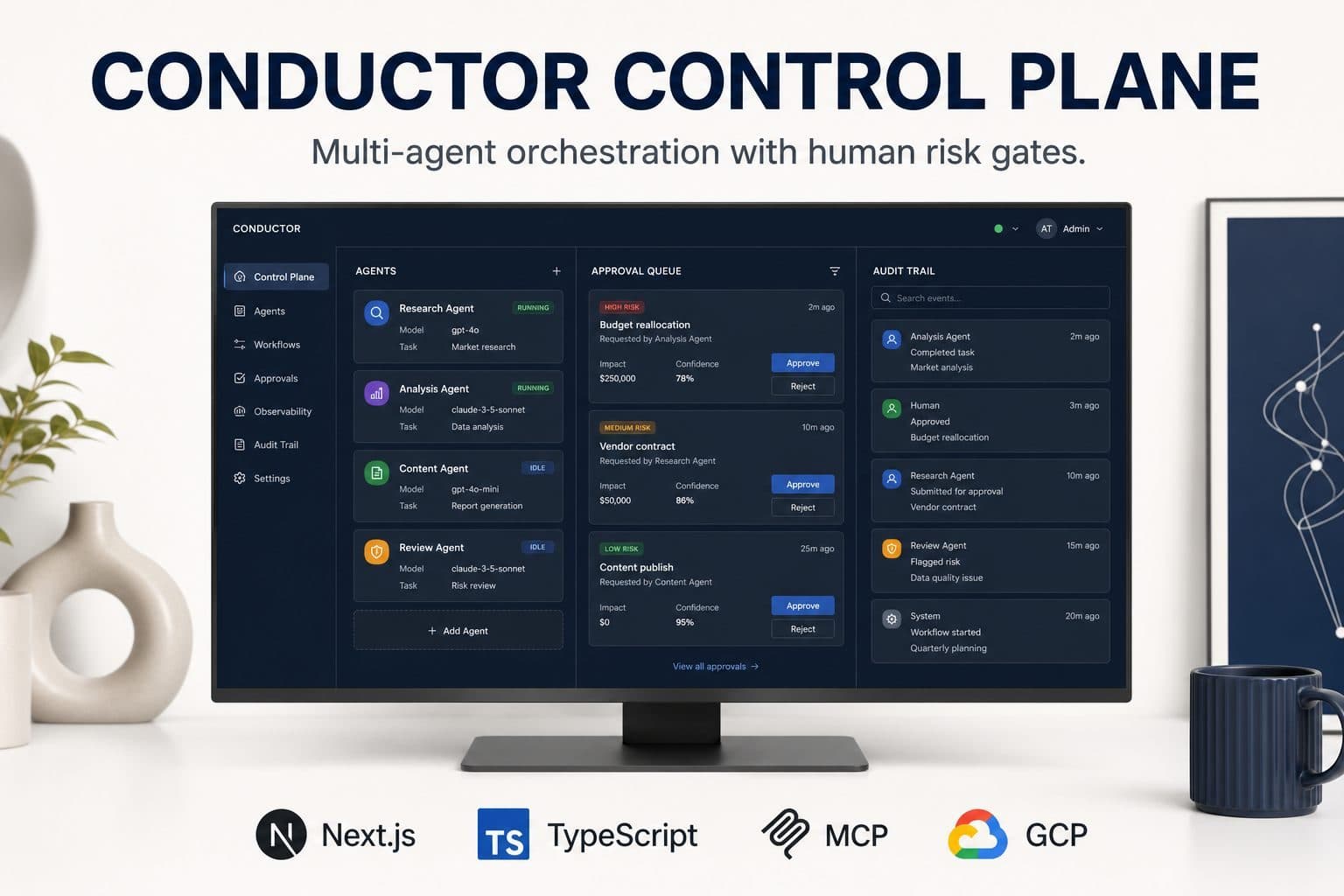
Conductor is VisionsCraft's operator control plane for multi-agent engineering: Hermes plans and verifies, coding agents execute against repos, MCP is the tool fabric, and humans approve high-risk work—with kanban, briefs, and an append-only audit trail. Auto-merge to main stays off.
The problem
Multi-agent coding without clear roles and approvals creates unattended merges and no audit trail when something breaks.
The solution
An operator UI on Cloud Run, always-on orchestrator, intake API, structured briefs, and human gates on risky tasks.
Conductor is an operator control plane for multi-agent engineering. Hermes plans and verifies; coding agents execute against repos; MCP is the shared tool fabric; humans approve high-risk work. Auto-merge to main stays off. Kanban, delegation briefs, an approvals queue, and an append-only audit trail keep hand-offs durable.
Implementation
Operator UI on Cloud Run, always-on orchestrator host, intake API for CLI/cron, structured briefs, and human gates on risky tasks.
Architecture
Next.js operator UI on Cloud Run. Hermes plans and verifies; coding agents execute against repos; MCP is the tool fabric. Kanban, structured briefs, an approvals queue, and an append-only audit trail. Auto-merge to main stays off.
Tech stack
- Next.js
- TypeScript
- Hermes
- MCP
- GCP
Results
- Clear roles: orchestrator vs coding agent vs human
- Audit trail of every hand-off
- No unattended merge to production branches
FAQ
What is a multi-agent control plane?
It is the operator layer that assigns roles to planning agents, coding agents, and humans—plus tools, approvals, and audit—so agentic engineering stays governed.
Does Conductor auto-merge to main?
No. Auto-merge to main stays off by design; humans approve high-risk or production-impacting work.
What is MCP used for?
Model Context Protocol is the shared tool fabric connecting the orchestrator and coding agents to repos and operational tools.